
Depression isn’t always loud, dramatic, or obvious. Sometimes, it hides in everyday habits, subtle feelings, and things we brush off as “just being tired” or “just a bad day.”
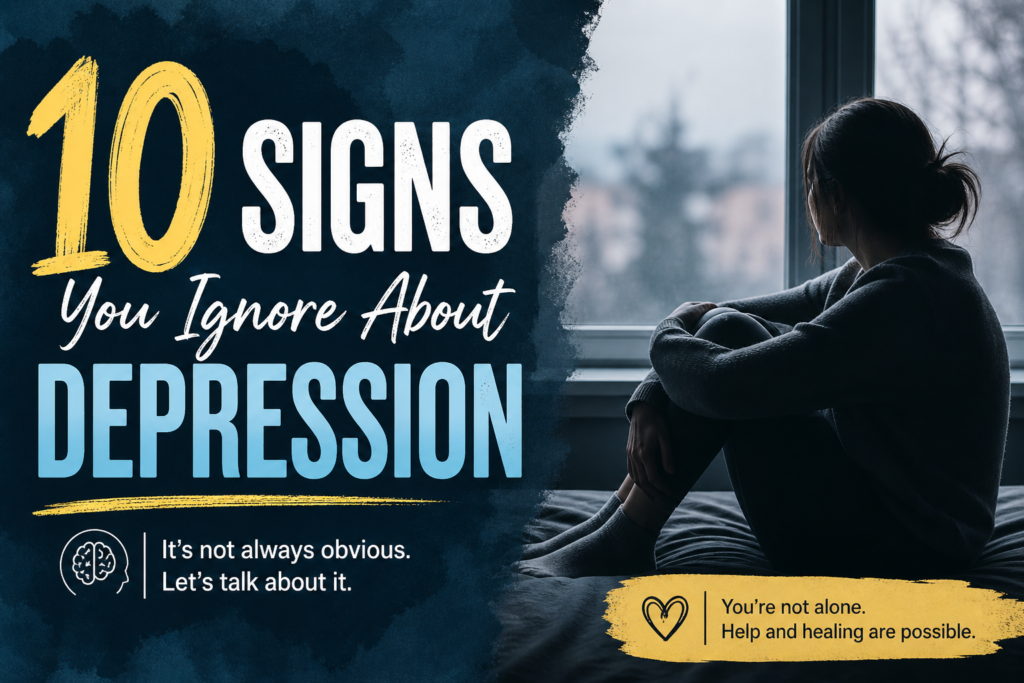
Many people live with depression without realizing it—until it starts affecting their work, relationships, and overall quality of life.
Here are 10 signs you might be overlooking:
1. Constant Fatigue (Even After Rest)
You sleep, maybe even more than usual—but still feel drained.
This isn’t just physical tiredness; it’s a deep, persistent lack of energy.
2. Losing Interest in Things You Once Loved
Hobbies, passions, even favorite shows or food—suddenly, they don’t excite you anymore.
This loss of interest (called anhedonia) is one of the most common signs.
3. Changes in Sleep Patterns
Sleeping too much… or not being able to sleep at all.
Both extremes can signal something deeper than stress.
4. Irritability or Short Temper
Depression doesn’t always look like sadness.
Sometimes, it shows up as frustration, anger, or snapping at small things.
5. Difficulty Concentrating
Simple tasks feel harder.
You reread things, forget details, or struggle to stay focused—even on important work.
6. Appetite Changes
You might eat more for comfort—or lose interest in food entirely.
Noticeable weight changes often follow.
7. Feeling Numb or Empty
Not sad. Not happy. Just… nothing.
Emotional numbness can be one of the most confusing signs.
8. Withdrawing from People
You cancel plans, avoid messages, or prefer being alone more than usual.
Social isolation often feeds the cycle of depression.
9. Negative Self-Talk
Thoughts like:
- “I’m not good enough”
- “I’m a burden”
- “What’s the point?”
These patterns can become automatic and hard to stop.
10. Loss of Motivation
Even small tasks—like getting out of bed or replying to messages—feel overwhelming.
It’s not laziness; it’s mental exhaustion.
Final Thoughts
Depression doesn’t always announce itself. It can quietly settle into your routine until it feels “normal.” But ignoring these signs can make things heavier over time. If you recognize several of these in yourself, it might be worth reaching out—to a trusted friend, a support group, or a mental health professional. You don’t have to figure everything out alone.